


As the popularity of e-commerce continues to rise, advertising campaigns have become more and more important for increasing sales. An advertising campaign is an integrated marketing communication tool where messages that represent the beliefs, personalities, and ideas of people are published on a type of media channel. For instance, videos about testing a dishwashing soap to support the credibility of your brand that targets homemakers.
The most important thing to remember about advertisement campaigns is that they adhere to a specific set of objectives such as raising brand awareness, converting your social media followers into brand consumers, and maintaining the loyalty of your consumers with your brand. To get a better illustration, you may refer to SkyWord’s interpretation of the marketing funnel from top to bottom.
Amazon Advertisement Campaigns
Now that you know what advertisement campaigns are, know that Amazon also encourages the use of digital marketing for the success of your business. It may sound complicated, but all you need to do is hit the register button.
Curious as to what to expect when working hand-in-hand with Amazon’s digital marketing service? It provides customers avenues to discover, browse, and shop for brands and products according to their preferences. Amazon advertisement campaigns can be created in various ways like through a single image, informational video, or a combination of texts, and published across media platforms including the brand’s main website, social media, streaming account, and more.
The reason why Amazon supports the use of advertisements is because of the benefits that it provides to e-commerce sellers. Among these benefits are:
- Newer ways to reach the shoppers where trends are presented in a creative manner to connect with your target market
- A possible profit growth where advertisements can potentially transform media viewers into buyers
- A customizable budget where even small businesses can now have access to digital advertising solutions
- Quick execution with the capacity to optimize your advertisements to reach a larger audience
- Real-time insights where you can review the success of your Amazon advertisement campaigns based on actual numbers (e.g. total monthly viewers reached, highest performing posts, etc.)
The possibilities are endless. Through Amazon advertisement campaigns, you can promote your business using sponsored displays, video ads, audio ads, sponsored products, sponsored brands, and so on. If you think that your business needs an extra boost, you can also check out Amazon’s article on “The Basics of Success: Understanding Amazon Advertising.”
Using Keywords for Amazon Advertisement Campaigns
An important thing to remember about Amazon’s digital advertising solutions is the way keywords perform for the success of your Amazon advertisement campaigns.
Keywords are tools used in connecting businesses with their customers or consumers. Incorporating keywords into your advertisements becomes an advantage because it creates “traffic” or more clicks and visits to your e-commerce site.
On Amazon, you have the option to create manual campaigns (options decided by the seller) or automatic campaigns (options preset by Amazon). Amazon also offers keyword targeting which permits sellers to select keywords that they want to display on their products in either the product details section or user search results.
Aside from keyword targeting, product targeting is also offered so that sellers can stay connected with an audience while browsing through products or product categories via Amazon.
Keyword-targeted advertisements are available for advertisements falling under the sponsored brands and sponsored products channel. They work by matching the search results or search suggestions with the keywords used on your Amazon advertisement campaigns. Additionally, keyword-targeted advertisements show if your advertisements qualify in the criteria set by Amazon.
A keyword can match with a search tab depending on the classification of the match that it falls under. For Amazon, there are 3 main kinds of matches: a broad match, a phrase match, and an exact match. Below are the definitions of each:
- A broad match is a keyword connected to a search term that is least restrictive with the number of words and is general in definition (e.g. yellow shirt). For obvious reasons, a broad match reaches out to a comparatively larger audience.
- A phrase match is defined by a keyword matching with a search term because of the phrase’s order (e.g. yellow Justin Bieber shirt vs. yellow shirt Justin Bieber).
- An exact match only transpires when a keyword captures a specific search with the same wording and order (e.g. Justin Bieber My Worlds Acoustic Album). An exact match is the opposite of a broad match because it is the most restrictive form of match type.
For a step-by-step guide on how to utilize keywords, “How to Use Keywords in Amazon Ads?” is a great article that goes deeper into the subject.
Finding Relevant Keywords for Amazon Advertisement Campaigns
Now that you know how keywords come into play on Amazon, you can explore the relevant keywords for your Amazon advertisement campaigns. There are 2 important things that you should remember when doing so: the first is to understand the personality of the consumer, and the second is to possess basic Search Engine Optimization (SEO) skills detailed in our Amazon SEO Guide.
So how does the target market’s personality operate in the success of your e-commerce business? Note the digital customer experience. Grasping the digital customer experience is significant because it teaches sellers how to keep business going in the digital age; it shows how product price and quality are not the only factors that determine your business’ success.


In this figure, you can see how digital customer experience significantly impacts the return rate of a consumer. Meaning, if the consumer finds the services that come with your e-commerce site satisfying, there is an 88% chance that they will return to your site for another purchase.
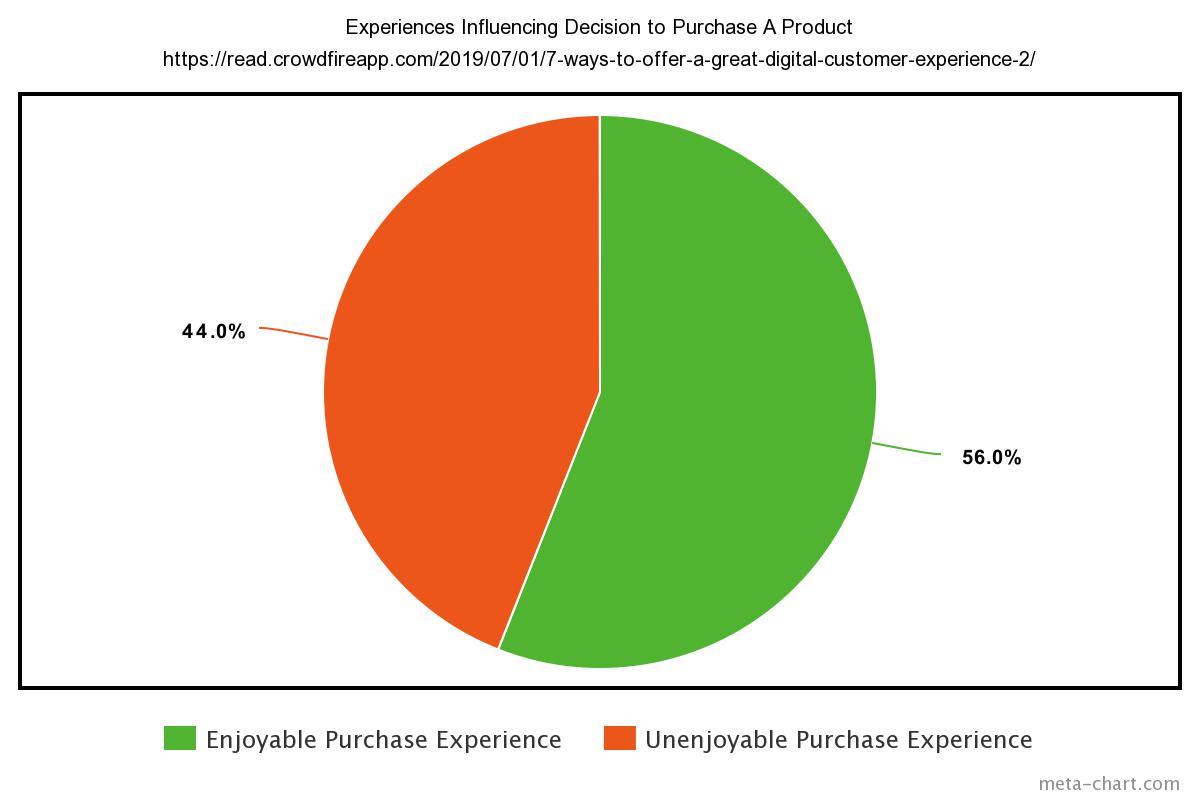
It has also been found that overall enjoyment influences 56% of digital consumers to purchase a brand’s product or service. Besides these two pieces of data, reports show that experience-driven businesses have around 1.6-1.9 times higher growth in customer retention. Given these numbers, digital customer experience is not a trivial matter. If you want to read on it, you can explore more with Ashwini Dave’s “7 Ways to Offer A Great Digital Customer Experience.”
Now that you know the importance of great experience, your next focus is how to apply it to your business. There are 7 ways to do so as outlined below:
- Understanding the consumer’s journey or knowing their demographics and broad interests
- Focusing on mobile devices or optimizing the design and support that your site provides
- Delivering an omnichannel experience or having all sites integrated in one application or website
- Improving customer support with advanced technological software
- Speeding up one’s website
- Offering a personalized experience or collecting bits of customer information to satisfy overall customer experience
- Training one’s agents to address non-automated services like chat support
As for keyword optimization, know this: there are 2 essential ranking factors on Amazon, and one of these is mastering how Amazon keywords are capable of matching with your targeted audience and the right consumers. Using the correct Amazon keywords has great benefits for your e-commerce business, including boosting your brand or products on the search results page of Amazon. Take note of the following strategies for tips on how to optimize your Amazon keywords:
-
Determine and Concentrate on Your Target Audience
Underline the characteristics of your target audience and turn these elements into keywords. Avoid using general key terms to refer to the market and make it specific to their needs or interests. For instance, using “food supplements” specifically instead of using keywords like “fitness” or “gym.”
-
Include Keywords in Your Product Listings
After you have selected your keywords, include these in all of your product listings. Be sure not to repeat the same keywords because you only need to mention them once for your product to rank higher.
-
Learn How to Use Backend Keywords
Backend keywords are keywords that customers cannot see on your website. These are effective for situations where you have a long list of more generic keywords but are planning to use only the most specific keywords in public. Backend keywords contribute to a higher ranking for search results, which is why we highly recommend using them.
Take time to master finding relevant keywords and apply this knowledge to your Amazon advertisement campaigns in the form of images, videos, and so on. At the end of the day, your product and your brand will benefit from the boost in reach and the higher amount of traffic. Get to learn more about the basics of SEO on Amazon by clicking here.
If you’re looking for professional help and especially for social media content creation and management, do not hesitate to reach us at Crowdfire.com. We are just a click away with social media manager services like tailored social media posts, relevance-based content creation, and more!
Did this article help you out? Share your insights in the comments, we would love to hear from you!
With Crowdfire, you can find curated content, schedule your posts, engage with your audience, deep-dive into analytics and create custom reports. Now introducing Social listening. Try it for free.