


As a marketer, you’re probably already familiar with personalization.
It isn’t a new concept, but the need for personalized content has changed over the last year.
Why?
For more reason than one.
There’s the pandemic, the economy, political and social change… need we say more?
All these changes have influenced the way people think, behave, and act — including how they buy online.
And that’s where personalization comes into play.
In this article, we will outline how personalization in content marketing is part of the new normal. We’ll also explain how you can implement personalization in your content marketing strategy.
But first, let’s start from the top and clarify what personalized content is and why it’s so important in marketing.
What is personalized content?
Personalized content is any type of content tailored to individual consumers.
From social media posts to landing pages on your website, you can pretty much personalize any type of content.
‘But how do you personalize it?’ we hear you ask.
Good question.
Using a variety of data, you can segment your audience and target them with the right content at the right time.
Here’s the type of data you can use:
- Demographics: This includes age, gender, and location. All of this information gives you insight into how to personalize your content.
- Purchase history: If someone has already bought from you, you can show them content that’s different from those who haven’t.
- Online behaviour: The way consumers behave online can give you a good indication of what content to show them. This behaviour could be anything from how often they visit your site to the referring URL that brought them to you.
- Device: From smartphones to desktops and everything in between, the type of device used can influence the content you show your consumers.
What is an example of personalized content?
Now let’s take a look at some examples of personalized content in action.
Email personalization involves sending emails to specific people at certain times.
This could be a single email or a series of emails that are part of a larger campaign. Either way, the goal is to get the recipient to engage with the email and become a qualified lead or conversion.
Here’s an example of a personalized email from Swimathon:

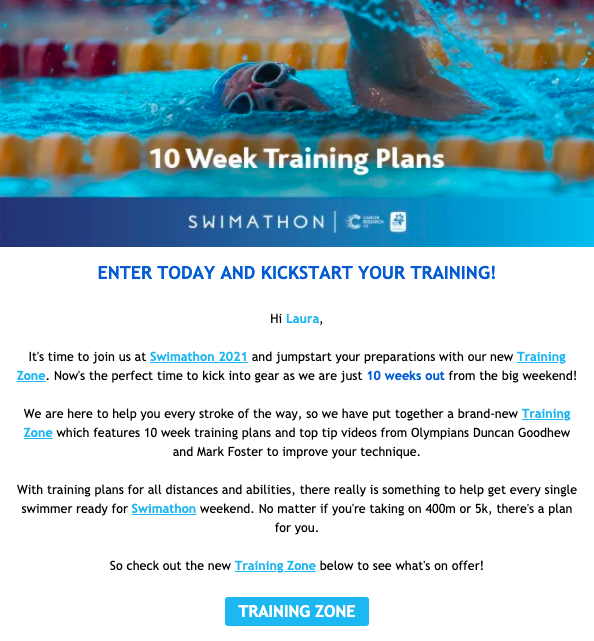
Let’s break it down and take a look at how this email has been personalized:
- Use of the recipient’s name: Be honest, you feel more inclined to open an email that addresses you directly, right? We sure do.
- Personalized language: The email uses a mix of first and second-person language to engage with the recipient.
- Imperative verbs: Phrases such as “enter,” “check out,” and “join us” encourage the recipient to take action.
- Call-to-action (CTA): Ending the email with a clear CTA guides the recipient where you want them to go.
If you want to look at some inspiration for personalized emails, take a peek at these email templates.
Social media
Personalization on social media usually involves the use of targeted ads.
With the help of consumer data, the social platform decides which users should see your posts and when they should see them.
This makes them more inclined to engage with the post.
Here’s an example of a Facebook ad from monday.com, a project management platform.


The posts that the platform shows will change based on whether they’re paid ads, but the core principle is the same — showing relevant content to the right people.
Video
By adding personal elements to videos — such as the viewer’s name, email, or job title — you grab their attention, making it a great way to engage your consumers.
But video personalization doesn’t just involve adding the viewer’s name.
It’s also about targeting the right people with relevant content.
The below video from Protolabs is a great example:

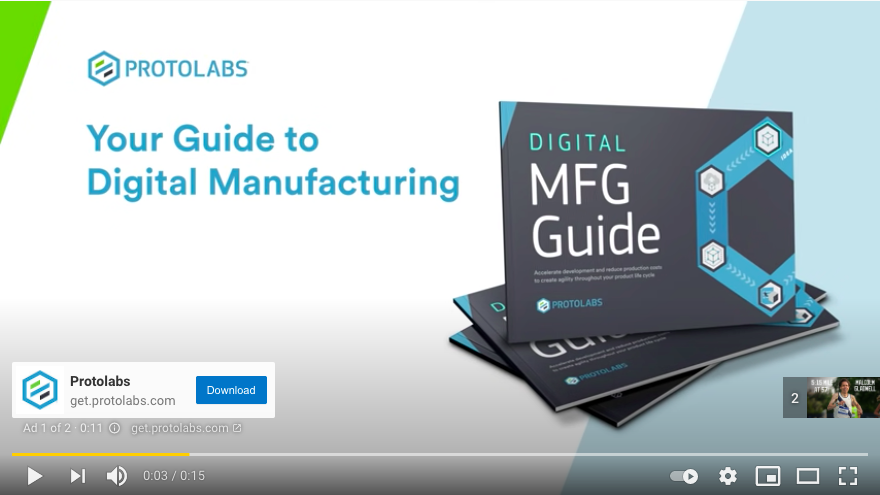
This ad pops up on YouTube before a video about digital marketing, a similar topic to the ad’s content.
If this ad appeared before a video about horse grooming, the viewer probably wouldn’t engage with it.
But by targeting a viewer who’s interested in digital marketing, they’ve got a higher chance of engagement.
Website
Let’s say a consumer has shown interest in your company, and you need to nurture them into a sale.
You might want to direct them to some case study examples from consumers who have already used your product or service, right?
Well, that’s website personalization.
You’re showing consumers a landing page that provides them with exactly what they’re looking for.
And there are lots of other ways you can personalize your website, too.
It could be anything from a chatbot on your homepage to recommending similar articles on your blog.
Here’s an example of a chatbot pop-up from Track-POD, a route planner and routing platform:


And here’s a webpage that suggests recommended content for credit repair companies:

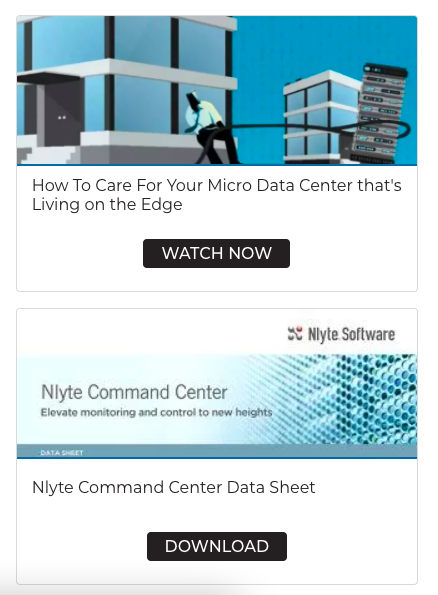
Ultimately, all of these features allow you to provide a better experience for your website visitors.
What are the benefits of personalized content marketing?
If you’ve not used personalized content marketing before, you might be wondering what all the fuss is about.
For most businesses, the effort of personalizing content is worth it. They see better results, higher conversion rates, and an increase in engagement.
So let’s take a look at some of these benefits in more detail.
Build customer relationships
Personalizing content helps you create a better relationship with your customers.
But don’t just take our word for it: 98% of marketers believe it, too.

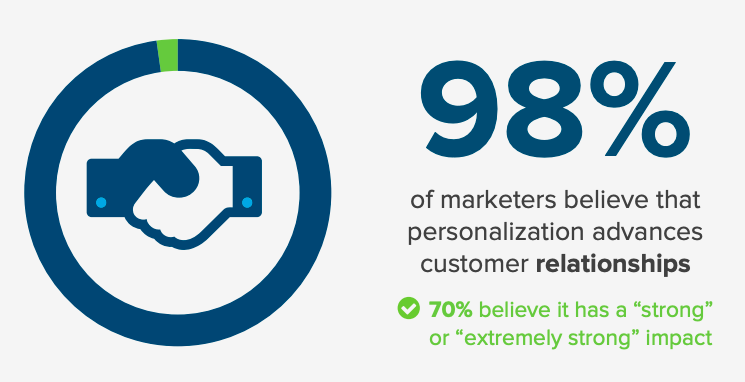
But how exactly does personalized content build customer relationships?
You show consumers content that’s relevant to them in some way.
Whether based on their demographic or the stage they’re at in the customer journey, you present them with content related to the situation they’re in.
That’s a great way to build a good customer relationship.
So stay away from that generic content and start thinking about how you can get personal.
Get better results
Research shows that 90% of marketers saw a better return on investment by using personalization.

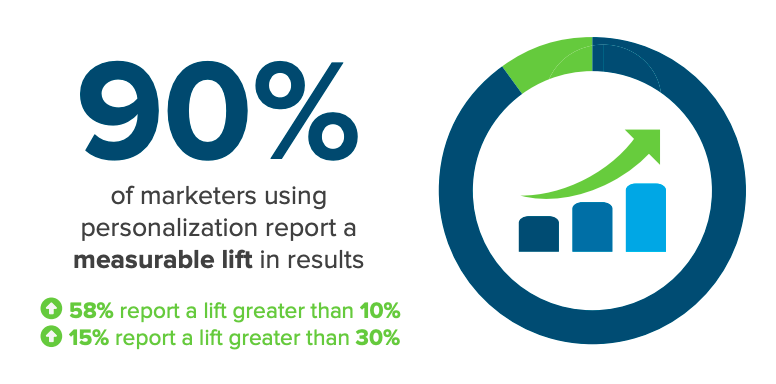
And not to mention, 56% of businesses reported an increase in lead generation.
So how does personalization lead to an increase in results?
Well, it’s mostly due to showing consumers the right messaging at the right time.
Targeting your content allows you to be strategic. You can choose what consumers see, when they see it, and what action they should take.
As a result, you’ve got a higher chance of nurturing consumers into the sales funnel and turning them into a conversion.
Provide a better customer experience
With targeted and personalized content, your consumers get a much better experience.
Think about it — you won’t be using typical, generic content. You’ll be using content that’s relevant to your audience, engaging, and insightful.
A massive 88% of marketers said they use personalization to improve the customer experience, so it’s clear that it makes a difference.
Let’s take a look at an example.
This landing page outlines the best PEO (professional employer organization) providers. But it also allows the user to customize the content by entering information specific to their needs.


So instead of scrolling through an endless list of the best PEO providers, the user can filter what they see. As a result, they get a much better experience on the website by choosing what they see.
Is there room for improvement?
In a word, yes.
Research shows that 74% of marketers believe that personalization should be a bigger priority than it is.

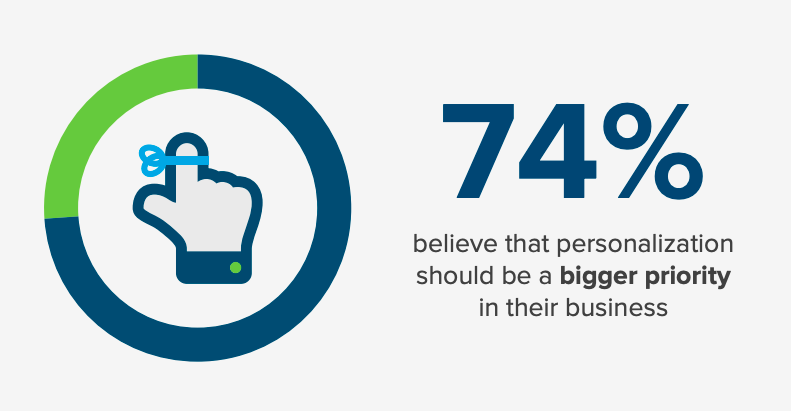
And only 18% of marketers are “very” or “extremely” confident that they have a successful personalization strategy.
So, what’s the solution?
Unfortunately, there’s no single way to utilize personalization in your content marketing fully.
Every business is different, meaning they all require different methods and strategies to personalize their content.
But there are a few things you can do to make sure you’re using personalization to its full potential.
This leads us very nicely onto our next section.
How to use personalization in your content marketing strategy
There’s no one-size-fits-all approach when it comes to personalizing your content, but there are some best practices you can follow to ensure you make the most of it.
So let’s take a look at what these best practices involve:
Collect accurate and relevant data
Put simply, without accurate data, you won’t be able to target consumers effectively.
Why?
Because delivering messages that resonate with your audience requires accurate data and insights.
Research shows that nearly half of marketers feel they don’t have sufficient data or insights for effective personalization. This statistic is pretty surprising, given how important data is to the personalization process.
To avoid missing out on the data you need, ask yourself the following questions:
- How are you going to collect data?
- What data do you need?
- How will you categorize and store this data?
Once you’ve mastered this, you can make sure that you’re personalizing content as efficiently as possible.
Map the customer journey
To figure out what content to show your audience, you need to understand different customer journey stages.
But how exactly does identifying the customer journey help with personalization?
Let’s use an example.
A repeat customer lands on your page. As they start to scroll, the following pop-up appears:


This pop-up isn’t tailored for a repeat customer.
But if you had known what customer journey stage the viewer was in, you could show them a relevant pop-up.
So make sure you map out what the customer journey looks like and the type of content you want to show consumers at each stage.
Use artificial intelligence (AI)
Recent research shows that the top use for AI in marketing is to provide a personalized experience, followed closely by customer segmentation.

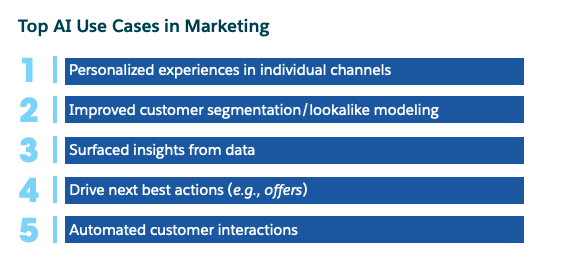
Marketers are hopping on the AI bandwagon when it comes to personalization.
That means if you’re not already using AI, you might want to think about giving it a try.
Not only will it help you personalize your content and segment your audience, but it’ll also streamline the entire process.
You can automate the personalization process to save yourself time. That’s pretty useful when you’ve got a lot on your plate.
Find the right approach
There are many different ways you can use personalization in content marketing, so you must identify the right way for your business.
Here are a few of the most common types:
- Rule-based targeting: This is targeting based on real-time data. It could be how a visitor behaves on your site, their geographic location, or even how they reached your site in the first place. It allows you to deliver the right content immediately.
- Triggered messages and notifications: When a consumer performs a specific action, an automatic message or notification gets sent their way.
- Customer-journey: As we’ve already mentioned, this involves targeting consumers based on where they’re at in the customer journey.
This isn’t a definitive list, so spend some time researching the methods out there.
We’d recommend trying a few to find what works best for you — you might even find that you need more than one.
Personalize your emails
Emails are the most popular method of personalized content marketing, so you must make the most of them.
Here are a few of the basic personalization tactics you can use:
- Customize your subject line: This will be the first impression your subscribers have of your email, so it’s important to get it right.
- Personalize your “to” and “from” name: This is a pretty simple tactic, but an important one nonetheless.
- Segment your audience: To deliver a personalized experience, you can send different emails to various audience segments.
- Use the right imagery: Make sure you consider how subscribers will engage with your images.
- Optimize for mobile: 42% of emails are opened on a mobile device, so make sure you consider this when designing your email.
- Consider using dynamic content: This involves changing entire content sections to make the email more appealing to certain audience segments.
- Pay attention to timing: Timing is important with email marketing, so make sure you understand when it’s best to send your emails and how often you should send them.
These are all good starting points, but make sure you do your research to figure out your consumers’ needs.
If you’re not sure where to start, you can always look at some email outreach templates to get the ball rolling.
Implement success measures
Lastly, you need to know how to measure the success of your personalization.
This will give you the insight needed to figure out what went well and what you could do better next time.
So, how can you measure the success of personalization?
We’ve listed a few measurements to get you started:
- Survey your customers: Getting feedback from your customers is the perfect way to identify areas of success and improvement. Find out if they feel they’ve received a better customer experience or if their brand perception has changed.
- Conversion rates: Set a measure for how many conversions you’d like to see.
- Engagement level: Increased engagement can be an indicator for successful personalization, so think about how you could measure this.
- Increase market share: Review your market share before and after your personalization efforts.
Why is content personalization important now more than ever?
2020 was a year unlike any other. As a result, the entire landscape of customer behavior and expectations changed.
Personalization is important to consumers. In fact, 85% of them expect it. So make sure you think about how to implement personalization into your content marketing strategy.
It’s not a straightforward process, but the results will speak for themselves. Having read this article, you’ve now got a solid starting point to craft your own personalized content marketing strategy. So get out there and do it!
About The Author
Brad Smith is the CEO at Wordable.io and the Founder of Codeless (a content production agency). His content has been highlighted by The New York Times, Business Insider, The Next Web, and thousands more.