

 Posted by
 Consistently creating high-quality content for SaaS blogs is a common problem. Often, that challenge is the result of having too few resources to devote to content creation and a need for content calendar ideas.
Content distribution can help with the first problem. For the second, you need some creative ideation.
This article covers 30 content calendar ideas to keep your content plan running smoothly.
1. Statistic reports
Statistics are invaluable to others in your industry. Statistical reports will help you gain traffic and secure backlinks as others use your stats to source their blogs. Together, these things will grow your site and brand authority.
2. Curated content
Curated content is mostly used as a social media strategy, but it can also be helpful with blog posts. Roundups of blogs in your industry can be a great resource to create for your own blog. It’s also an opportunity for a link-for-link exchange with other heavy hitters in your field.
3. Product roundups
Product roundups allow readers to compare and contrast different tools and solutions while relying on your expert opinion. In other words, it’s a good way to build authority.
These roundups also serve as a way to promote your own product, as you can seamlessly slip your tool into the list and highlight its best features.
4. How-to guides
The guides on your blog should be tied to your product. For instance, if you sell a product management tool, you could create guides on how to colour code a project pipeline, how to manage due dates for teams, how to follow up on specific tasks, and so on.
5. Keyword gaps
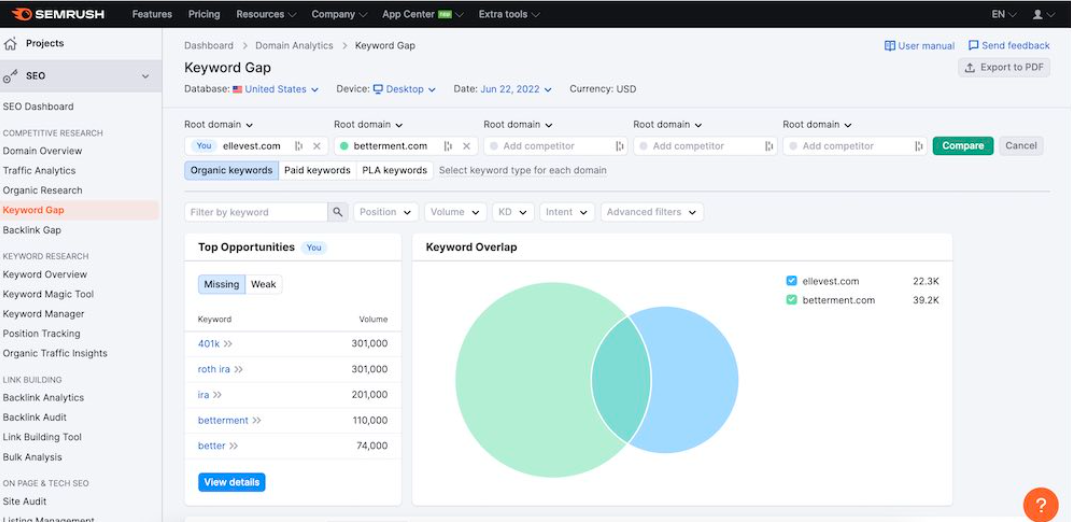
Keyword gaps refer to the gap between what search engine users are seeking and the results they receive. If you match the keywords in your content with user search intent, your traffic will increase. Below is an image of how a keyword research tool like SEMrush can help you do a keyword gap analysis.
6. Competitor analysis
Doing thorough competitor analysis with an SEO research tool will let you see what keyword traffic is going to your competitors and what topics are receiving a high volume of readers. This information can then be used to craft a content strategy for your blog.
7. Customer surveys and interviews
Hearing directly from your customers is a goldmine for blog and social media posts. With customer info, you can directly address the pain points your target audience cares about specifically. This makes your content valuable to them, and their chances of converting are higher.
8. Transcripts of podcasts or videos
If your company has a podcast or YouTube channel, repurpose the video scripts as blog posts. You’ll get more from every piece of content and reach a larger audience than you would, publishing to just one marketing channel.
9. Seasonal content
Seasons and holidays create great opportunities for good content calendar ideas. Run sales and promotions, guides on seasonal keywords, tips for preparing for holiday sales, and more.
10. Event or webinar promotion
If you host events or webinars, you can use your blog as a promotional tool. Post course lists, speaker bios, feature interviews with special guests, and testimonials from past events. Double your reach by breaking the promotional blog into pieces and repurposing them as social media posts. When promoting your events or webinars via email, utilize DMARC reports to ensure secure email communication channels and protect against unauthorized access.
11. Data-driven blog posts
Data-driven content is the heart and soul of any good content strategy. Using Google Analytics and other online competitive intelligence tools, you can see your highest-performing demographics, the content they engage with, and a myriad of other crucial data points.
12. Social media engagement
Use your social media management tools along with ad automation tools to discover analytics about your social posts. From there, you can see what your audience likes the most and expand those posts into long-form blog posts. For instance, if your audience interacts the most with statistics, make more stats blogs. If they engage most with posts about features, write more feature breakdowns.
13. Adapted LinkedIn posts
LinkedIn is known for building personal brands via longer-form thought pieces than other social media platforms. This makes LinkedIn posts great candidates for distribution on your blog.
14. Guest posts
Many people are eager to guest post on other companies’ blogs in exchange for a link back to their website or as an opportunity to grow their own thought-leadership authority.
Setting up a framework for accepting guest posts is a great way to expand your content calendar without doing all the work in-house.
15. Team posts
Do a series on other members of the team. Offer a birds-eye view into the work of less audience-facing roles, such as IT development, operations, and human resources. Let your target audience get to know your company from the inside out.
16. Infographics
Infographics are visual content and very shareable. This makes them great distributable content for your social media content strategy in addition to your blog. For blog posts that include infographics, also include text breakdowns of what the graphic is describing to be more accessible and have better SEO results.
17. Create a series
Create a weekly or monthly series to share with your social networks. Examples could be:
- Roundups of favourite customer reviews
- Features from the CEO or CMO
- Musings about the industry
- Features of team members
- Anything else you’d like
18. Answer Google’s FAQs
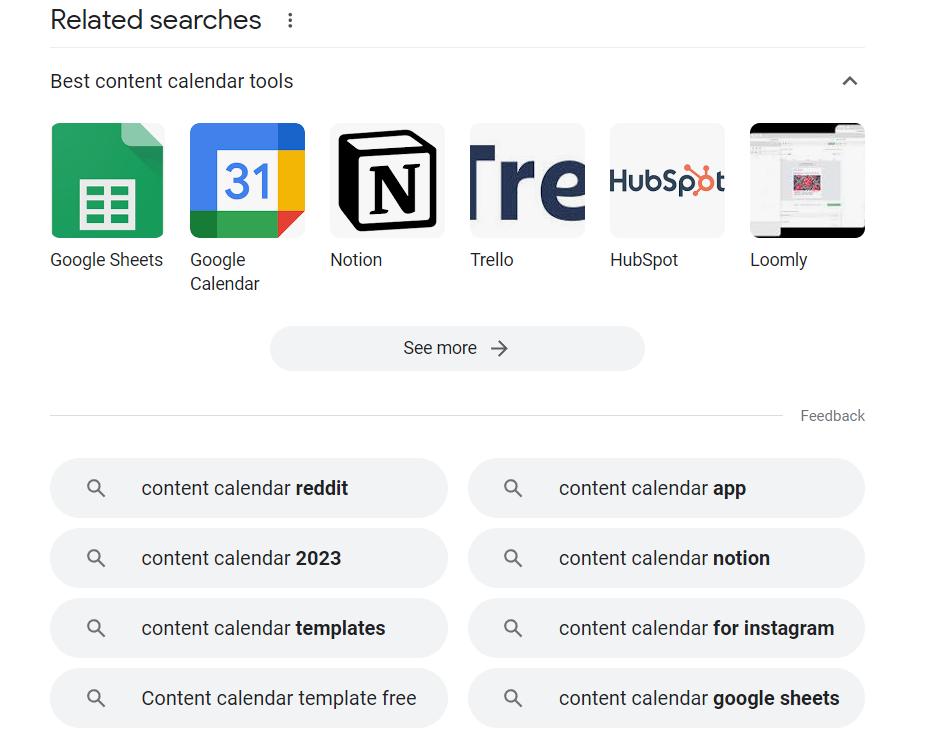
If you scroll down the page after typing in a query on Google, you’ll see “Related Searches.” This section will include tools and terms people have queried in Google and can offer many content calendar ideas to meet search demand.
19. Interview leaders in your industry
Many other SaaS companies are looking for ways to expand their reach and brand authority. Interviewing the founders and creators of other brands and companies is a double-win:
- Getting more credibility and exposure for your own company.
- Helping someone else grow.
20. User guides
Break down all of your features into step-by-step guides with screenshots. This will make everything your product has to offer easy to use and will cut down on customer service calls by pointing users to ready-made resources that address their questions.
21. User resource library
Once you have enough user guides, you can put them into one central library hub on your blog. This resource library can include frequently asked questions, user guides, and other helpful resources.
22. Video demos
Create video demos of your product and host them on your blog. Include transcripts of the video (if there is a voice-over) and a text explanation of the highlights and features.
23. “Best of” lists
Do roundups of the “best of” in your industry. These can include books, podcasts, digital tools, blogs, social media accounts, and other resources your audience will find valuable.
24. Hot takes
Hot takes or personal opinions are a double-edged sword. Voicing an opinion, especially one that may be controversial, is a great way to get audience engagement, but it can also turn against you quickly, depending on your stance.
Generally, people respect brands that voice values and hold to them, but be mindful of the point of view you’re publicly publishing on your blog and social media channels.
25. Case studies
Case studies are an excellent way to demonstrate social proof to potential buyers. Someone in the consideration stage loves to see products in action before they decide to buy. Case studies show how your product solves their problem, effectively moving potential customers through the buyer journey.
26. Template examples
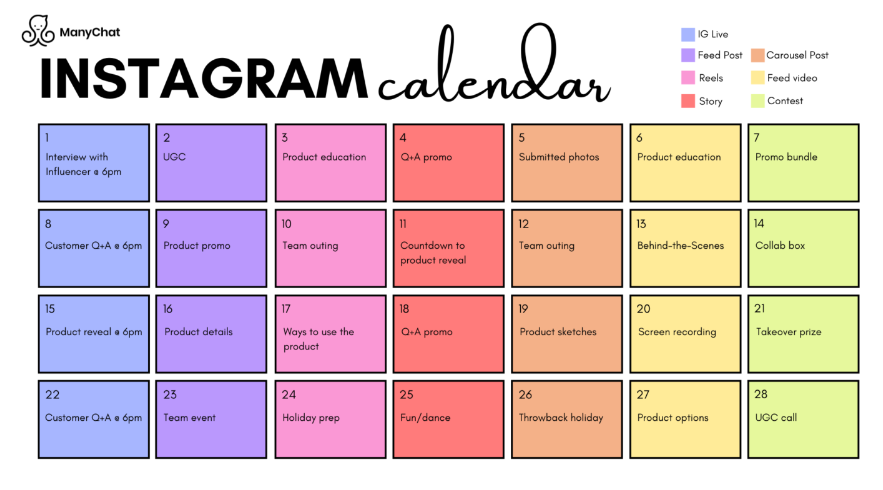
Templates make great blog posts and lead magnets. On your blog, have a template example formatted and published in your CMS. Then, give the user the option to download and customize the template.
This way, you not only get traffic to your post but also capture an email via a download to nurture as a lead later on. The image below is a good example.
27. Newsletters
If you run a weekly or monthly newsletter, that content can be adapted to blog posts. Distributing content across marketing channels like this allows you to maximize your reach with one piece of content.
28. Presentations
If someone on the team has done a presentation at a conference or on a webinar, use screenshots of the deck and a transcript of the talk as an informative blog post.
This is another great example of proper distribution, helping you get the most out of your content.
29. Search Engine Optimization
As the old tried-and-true approach, SEO remains one of the best ways to generate content for your blog. Use keyword research tools such as Semrush and Ahrefs to find keywords in your niche that have low difficulty and high volume.
Then, start writing using those keywords as your roadmap.
30. Evergreen content
Evergreen content is content that’s always useful and relevant. Things like seasonal content, promotional content, and current events have a shelf-life and are only relevant for a short time. Evergreen content can stay on your site for many years, racking up backlinks and authority with algorithms. Evergreen content includes things like glossaries of terms, checklists, and common questions and problems within your industry.
Start Publishing High-Quality Content Today
It’s common to feel stumped for inspiration when trying to develop content calendar ideas.
However, as we hope we’ve demonstrated here, dozens of content types help you build a solid, well-performing blog to grow your business.
Start with the first few that work the best for the infrastructure of your marketing team and build with each successful endeavour.